October sale - up to 30% off training courses – use code: OCTSALE26USA

17 February 2026
The Agile Onion: Building agile behaviours with PRINCE2® Agile
Many organisations adopt Agile practices with the best of intentions, yet still struggle to achieve the behaviours and mindset that Agile ways of working are designed to encourage. Teams may run stand...

Many organisations adopt Agile practices with the best of intentions, yet still struggle to achieve the behaviours and mindset that Agile ways of working are designed to encourage. Teams may run stand-ups, use backlogs or work in sprints, but collaboration, empowerment and responsiveness remain limited.
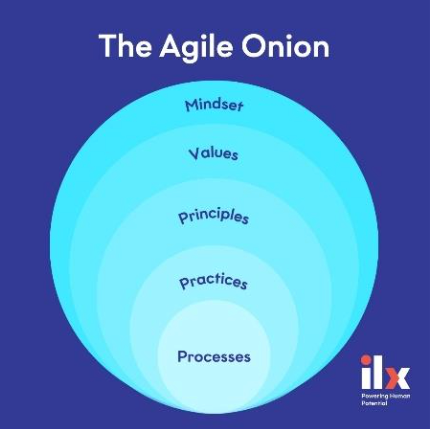
PRINCE2® Agile addresses this challenge by recognising that Agile is not just about techniques. It is about behaviours, culture and mindset. One of the most practical ways it illustrates this is through the Agile Onion: a simple model that shows how behaviours sit at the core of Agile delivery, supported by practices, processes and frameworks.
Understanding the Agile Onion helps teams focus on what really matters when building agility and avoid common pitfalls associated with superficial adoption.
What is the Agile Onion?
The Agile Onion is a conceptual model introduced in PRINCE2 Agile to show the layered nature of Agile. It is typically visualised as a series of concentric layers, with mindset and values surrounding the principles, practices and processes.
The key message is simple: true agility starts with a mindset change. Tools, methods and frameworks are important, but they are only effective when they are underpinned by the right behaviours. Without this foundation, Agile practices risk becoming mechanical or transactional, delivering limited value.
By contrast, teams that focus on behaviours first are better positioned to adapt techniques and frameworks in ways that genuinely support delivery.
Why behavioural change comes first
The first stage of the Agile Onion is mindset, closely followed by values. These behaviours influence how teams interact, make decisions and respond to change.
PRINCE2 Agile recognises that no framework or process can enforce these behaviours on its own. They must be encouraged, supported and reinforced through leadership, culture and ways of working. When teams demonstrate agile behaviours, they are more likely to communicate openly, address issues early and take ownership of outcomes.
This behavioural focus also aligns closely with modern leadership and change management thinking. Sustainable agility depends on how people think and act, not just on how work is structured.
The next step: principles, processes and practices
The inner layers of the Agile Onion represent Agile principles, practices and processes. These may include techniques such as timeboxing, prioritisation, visual management or iterative delivery, as well as structured approaches like Scrum, Kanban or scaled frameworks.
PRINCE2 Agile positions these elements as enablers rather than drivers. They provide structure, consistency and shared language, but they should always be selected and applied in a way that supports agile behaviours rather than constraining them.
This perspective helps organisations avoid a common mistake: adopting a framework without considering whether it fits their context, culture or objectives. The Agile Onion encourages teams to tailor practices thoughtfully, ensuring they reinforce the behaviours they are trying to build.
Using the Agile Onion to guide adoption
The Agile Onion is particularly useful for organisations at the early stages of Agile adoption. Rather than starting with tools or meeting practices, it prompts leaders and teams to ask more fundamental questions about how they want people to work together.
For example, instead of focusing immediately on sprint structures or roles, teams might explore how decisions are made, feedback is shared and trust is built. These discussions create a stronger foundation for introducing Agile practices later, increasing the likelihood that they will be used effectively.
The model is also valuable during retrospectives or continuous improvement activities. Teams can reflect on whether current practices are genuinely supporting agile behaviours or whether changes are needed to better align the layers of the Onion.
Common misconceptions the Agile Onion helps address
The Agile Onion also helps challenge several common misconceptions about Agile:
- That Agile is primarily about tools and ceremonies rather than mindset
- That adopting a framework automatically creates agility
- That governance and Agile delivery cannot coexist
- That behaviours will change simply because processes do
By explicitly placing behaviours at the centre, the model encourages more honest conversations about what needs to change for Agile adoption to succeed.
Building sustainable agility over time
Agile transformation is rarely a one-off initiative. It evolves as teams learn, mature and respond to new challenges. The Agile Onion provides a simple but powerful reference point throughout this journey.
As organisations grow more confident, they may experiment with new practices or frameworks. The Onion reminds them to continually check whether these changes support or undermine the behaviours they value. This focus helps prevent drift towards rigid process or superficial compliance.
Turning Agile principles into everyday behaviour
The Agile Onion captures one of the most important insights of PRINCE2 Agile: that agility is ultimately about people. By keeping behaviours at the heart of delivery, teams are better equipped to adapt, collaborate and deliver value in uncertain environments.
Used thoughtfully, the Agile Onion helps organisations move beyond “doing Agile” towards truly “being Agile”, supported by practices and frameworks that fit their context rather than define it.
At ILX, we support organisations and professionals in building agile capability that goes beyond tools and techniques. Explore our PRINCE2 Agile training to develop the mindset, behaviours and confidence needed for effective Agile delivery.