October sale - up to 30% off training courses – use code: OCTSALE26EUR

14 July 2026
Agile vs Waterfall: which methodology is right for your project?
Agile and Waterfall are two of the most widely used project management methodologies. Both provide an approach to planning and delivering work, yet they are built on very different assumptions about h...
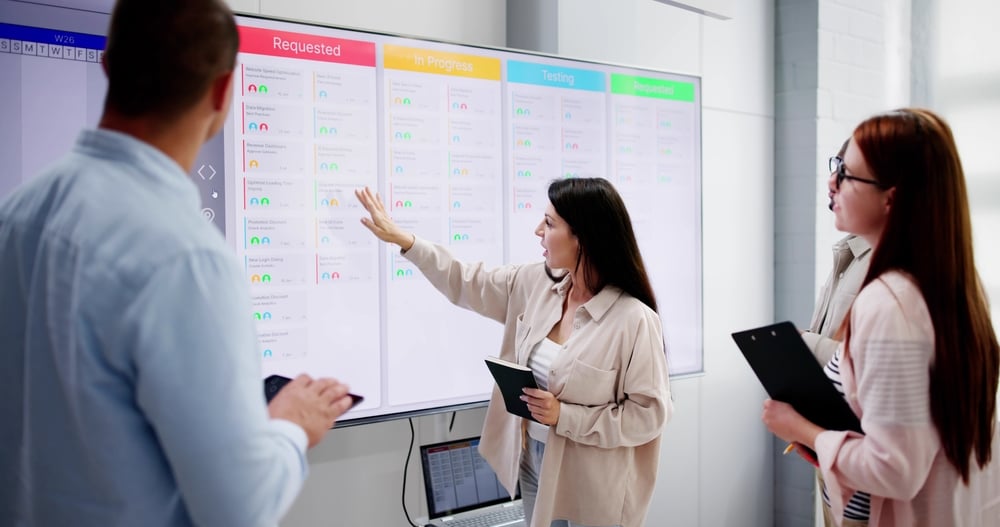
Agile and Waterfall are two of the most widely used project management methodologies. Both provide an approach to planning and delivering work, yet they are built on very different assumptions about how projects should be managed.
Waterfall follows a sequential process in which work progresses through defined stages. Agile takes an iterative approach, allowing teams to adapt as requirements evolve and new information becomes available.
Neither methodology is inherently better than the other. The right choice depends on the level of uncertainty involved and the degree of flexibility the project is likely to require.
Understanding the differences between Agile and Waterfall helps organisations select an approach that supports successful outcomes while avoiding unnecessary complexity.
What is Agile?
Agile is an approach to project delivery that enables teams to respond to change more easily and adjust their work as priorities develop. Rather than attempting to define every requirement at the beginning of a project, Agile teams work in smaller increments and refine their plans as delivery progresses.
The methodology emerged in response to the limitations of highly structured development approaches, particularly in environments where customer requirements changed frequently. Today, Agile is widely used in software development and product-focused organisations, and is also increasingly applied beyond technology projects.
Agile itself is not a single methodology. Instead, it describes a broader philosophy supported by frameworks such as Scrum and Kanban.
How Agile delivery works in practice
Agile projects are typically delivered through a series of short work cycles. Each cycle focuses on a defined set of priorities, allowing teams to review and refine outputs before moving on to the next stage of work.
This approach provides regular opportunities to gather feedback and adjust direction when necessary. Rather than waiting until the end of a project to evaluate whether requirements have been met, stakeholders remain involved throughout delivery.
Different Agile frameworks implement this principle in different ways. Scrum uses timeboxed sprints and defined team roles, while Kanban focuses on visualising work and managing flow.
Although these approaches differ in their implementation, they all support incremental delivery and continuous learning.
What is AgilePM®?
AgilePM® is a project management certification that teaches professionals how Agile approaches can be applied within project environments. Rather than introducing a new Agile framework, it explains how project managers can work successfully with established Agile practices such as Scrum and Kanban while maintaining effective project governance.
This makes AgilePM particularly valuable for organisations that want to adopt Agile ways of working without losing the structure needed to manage projects successfully. It also provides project professionals with practical guidance on selecting and applying Agile techniques in different delivery environments.
Key characteristics of Agile
Agile projects typically involve:
- Iterative delivery through short development cycles
- Frequent stakeholder engagement and feedback
- Continuous review of priorities
- Flexible planning that adapts to changing requirements
This approach allows teams to respond quickly when circumstances change and ensures that delivered outputs remain aligned with stakeholder needs.
What is the Waterfall methodology?
Waterfall is a traditional project management methodology that follows a structured sequence of stages. Each phase is completed before the next begins, creating a clear progression from project initiation through to final delivery.
The methodology is built on the assumption that requirements can be defined with reasonable accuracy before work starts.
A typical Waterfall project includes stages such as requirements gathering, design, development, testing and implementation. Progress flows through these stages in a predictable manner, which makes planning and governance relatively straightforward.
Waterfall remains widely used in environments where governance and predictability are essential. Regulatory requirements are one common example, although the methodology is also frequently used when contractual commitments or safety requirements influence how work must be delivered.
How Waterfall delivery works in practice
Waterfall projects follow a planned sequence of activities, with each stage building on the work completed previously. Requirements are gathered and approved before design begins, while testing generally takes place after development has been completed.
This structure provides clarity because stakeholders know what is expected at each stage and when key decisions will be made. Formal approval points also create opportunities to review progress before work moves forward. The approach is highly effective when requirements are unlikely to change.
Key characteristics of Waterfall
Waterfall projects often include:
- Detailed planning before delivery begins
- Clearly defined requirements
- Formal approval points between stages
- Structured documentation throughout the project lifecycle
Because activities are planned in advance, stakeholders often have greater confidence in the project plan and a clearer view of delivery expectations from the outset.
Agile vs Waterfall: the key differences
Although both methodologies aim to deliver successful projects, they approach delivery in fundamentally different ways.
| Agile | Waterfall | |
| Planning | Adaptive and iterative | Detailed upfront planning |
| Requirements | Can evolve throughout delivery | Defined before delivery begins |
| Stakeholder involvement | Frequent engagement and feedback | Engagement often concentrated at key milestones |
| Delivery | Incremental releases | Single delivery at project completion |
| Change management | Change is expected and accommodated | Change is managed through formal control processes |
| Documentation | Lean and focused on value | More comprehensive and structured |
| Project visibility | Continuous visibility of progress | Visibility linked to stage completion |
These differences influence how teams work, how decisions are made and how organisations manage uncertainty.
The advantages of Agile
Agile offers several benefits, especially when flexibility is important.
Greater responsiveness to change
Requirements often evolve as projects progress. Agile allows teams to adjust priorities without disrupting the entire delivery approach. This is valuable when organisations are developing new products or responding to rapidly changing customer expectations.
Earlier delivery of value
Because work is delivered incrementally, stakeholders begin benefiting from project outputs before the entire initiative is complete. Regular releases also provide opportunities to gather feedback and refine future work.
Stronger stakeholder engagement
Agile encourages ongoing collaboration between delivery teams and stakeholders. Frequent communication ensures that expectations remain aligned and reduces the risk of critical misunderstandings emerging later in the project.
Continuous learning
Regular review cycles allow teams to identify opportunities for improvement throughout delivery rather than waiting until the project concludes.
The disadvantages of Agile
Despite its strengths, Agile is not suitable for every situation.
Scope can become difficult to predict
When requirements continue evolving, it might be challenging to establish a fixed scope at the beginning of a project. This may create difficulties for organisations operating within strict contractual or regulatory constraints.
Stakeholder involvement is essential
Agile relies heavily on engagement from customers, users and decision-makers. Without consistent participation, teams may struggle to make informed decisions about priorities.
Long-term forecasting can be more complex
Although Agile provides excellent visibility of current progress, forecasting the final scope or delivery timeline is sometimes more challenging than with more highly structured approaches.
The advantages of Waterfall
Waterfall continues to offer considerable value in the right environment.
Clear structure and governance
The methodology provides a well-defined framework that supports planning, oversight and accountability. This is useful for large projects involving multiple stakeholders or external suppliers.
Predictable delivery approach
Because requirements are established early, organisations often have greater confidence in project scope and delivery expectations. This predictability supports budgeting and contractual planning.
Strong documentation
Comprehensive documentation creates a clear record of decisions, requirements and deliverables. This can be valuable in regulated industries or projects requiring extensive audit trails.
Easier progress tracking
Stage-based delivery makes it straightforward to measure progress against agreed plans.
The disadvantages of Waterfall
Waterfall also presents limitations that organisations should consider.
Adapting to change can be difficult
Changes introduced late in the project may have significant implications for planning and delivery. As a result, responding to evolving requirements could become costly and time-consuming.
Feedback arrives later
Stakeholders may not see completed outputs until relatively late in the project lifecycle, increasing the risk of discovering issues after substantial effort has already been invested.
Assumptions made early might persist
If requirements are misunderstood during planning, those misunderstandings may continue through later stages before being identified.
When should you use Agile?
Agile is often most effective when projects involve uncertainty or changing requirements.
Examples include:
- Digital transformation initiatives
- Product development projects
- Software development environments
- Innovation programmes exploring new opportunities
In these situations, the ability to adapt is often more valuable than creating a detailed plan at the outset.
Agile also works well in organisations that encourage collaboration and support frequent stakeholder involvement.
When should you use Waterfall?
Waterfall is a strong choice when requirements can be defined clearly before delivery begins.
Examples include:
- Construction projects
- Infrastructure initiatives
- Regulatory compliance programmes
- Projects governed by fixed contractual requirements
These environments often benefit from the predictability and control that Waterfall provides.
Where scope is unlikely to change significantly, a sequential delivery approach may offer greater efficiency than an iterative model.
Can Agile and Waterfall be used together?
Many organisations no longer view Agile and Waterfall as mutually exclusive options. Instead, they combine elements of both approaches to reflect the realities of modern project delivery.
A project may use a structured governance framework to support oversight and decision-making while allowing delivery teams to adopt Agile working practices. This is advisable when organisations need flexibility at team level without losing visibility at a programme or organisational level.
Hybrid approaches are often seen in digital transformation initiatives, where leadership teams require clear reporting and governance while technical teams benefit from iterative development methods.
Frameworks such as PRINCE2® Agile were developed to support this balance. They combine established project governance with Agile delivery practices, helping organisations create an approach that reflects both control requirements and changing delivery needs.
The growing popularity of hybrid approaches reflects a wider shift within project management. Rather than following a methodology rigidly, many organisations focus on selecting practices that support successful delivery within their specific context.
Compare Agile qualifications: AgilePM®, PRINCE2® Agile and more
Agile, Waterfall and professional development
Understanding both methodologies is increasingly valuable for project professionals as many organisations operate across a diverse project portfolio, which means practitioners may encounter Agile, Waterfall and hybrid delivery approaches throughout their careers. Developing knowledge of both methodologies helps professionals select the most appropriate approach for different situations and communicate more effectively with stakeholders across the organisation.
Qualifications such as AgilePM®, PRINCE2® Project Management and other project management certifications provide valuable insight into how different delivery approaches can be applied successfully.
Find the right project management qualification for you.
Frequently asked questions
Is Agile better than Waterfall?
Neither methodology is universally better. Agile often performs well in environments where requirements evolve, while Waterfall can be highly effective when scope is clearly defined from the outset.
Is Waterfall still used today?
Yes. Waterfall remains widely used across many industries, particularly where governance requirements, contractual obligations or regulatory considerations require a structured delivery approach.
Which methodology is best for software development?
Many software teams use Agile because it supports iterative development and ongoing feedback. However, some software projects continue to use Waterfall when requirements are stable and clearly defined.
Can a project move from Waterfall to Agile?
In some circumstances, organisations transition from one approach to another. The feasibility of this depends on the project's current stage and whether project parameters have changed.