October sale - up to 30% off training courses – use code: OCTSALE26SA

10 March 2026 | Updated on 10 March 2026
How to use Kanban boards: A practical guide for project managers
Kanban is an Agile approach that focuses on improving workflow by making work visible. Rather than prescribing fixed roles, timeboxes or ceremonies, it centres on understanding how tasks move from sta...
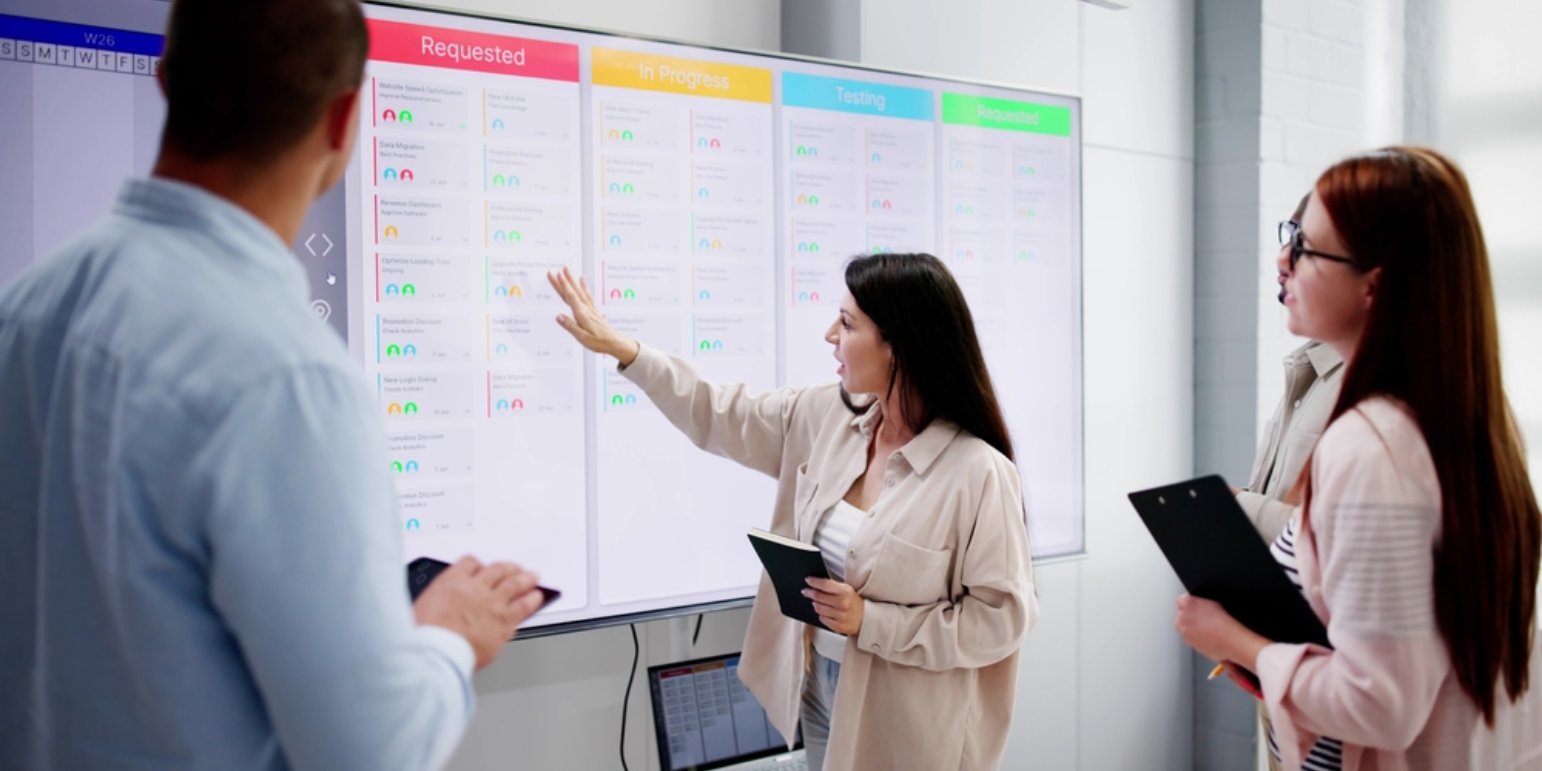
Kanban is an Agile approach that focuses on improving workflow by making work visible. Rather than prescribing fixed roles, timeboxes or ceremonies, it centres on understanding how tasks move from start to finish and identifying where delays occur.
For project managers, Kanban in project management offers a practical way to strengthen oversight without adding unnecessary processes. By visualising work clearly, teams can spot bottlenecks, manage capacity and maintain momentum throughout delivery.
What does the Kanban approach look like?
At its simplest, Kanban is built around visual project management. Work is represented on a Kanban board, which is divided into columns that reflect stages in the workflow. These stages might include “To Do”, “In Progress” and “Done”, though teams can tailor them to suit their context.
Each piece of work is captured on a card. As the task progresses, the card moves across the board from left to right. This movement provides an immediate, shared view of progress.
Unlike some Agile methods, Kanban does not require fixed-length sprints. Work flows continuously. Teams focus on completing tasks and improving how work moves through the system, rather than committing to a set outcome within a timeframe.
A key feature of Kanban is limiting work in progress (WIP). By setting a maximum number of tasks allowed in a particular column, teams reduce multitasking and encourage completion before new work is started. This helps maintain flow and reduces the risk of tasks remaining partially finished.
An example Kanban board may look something like this: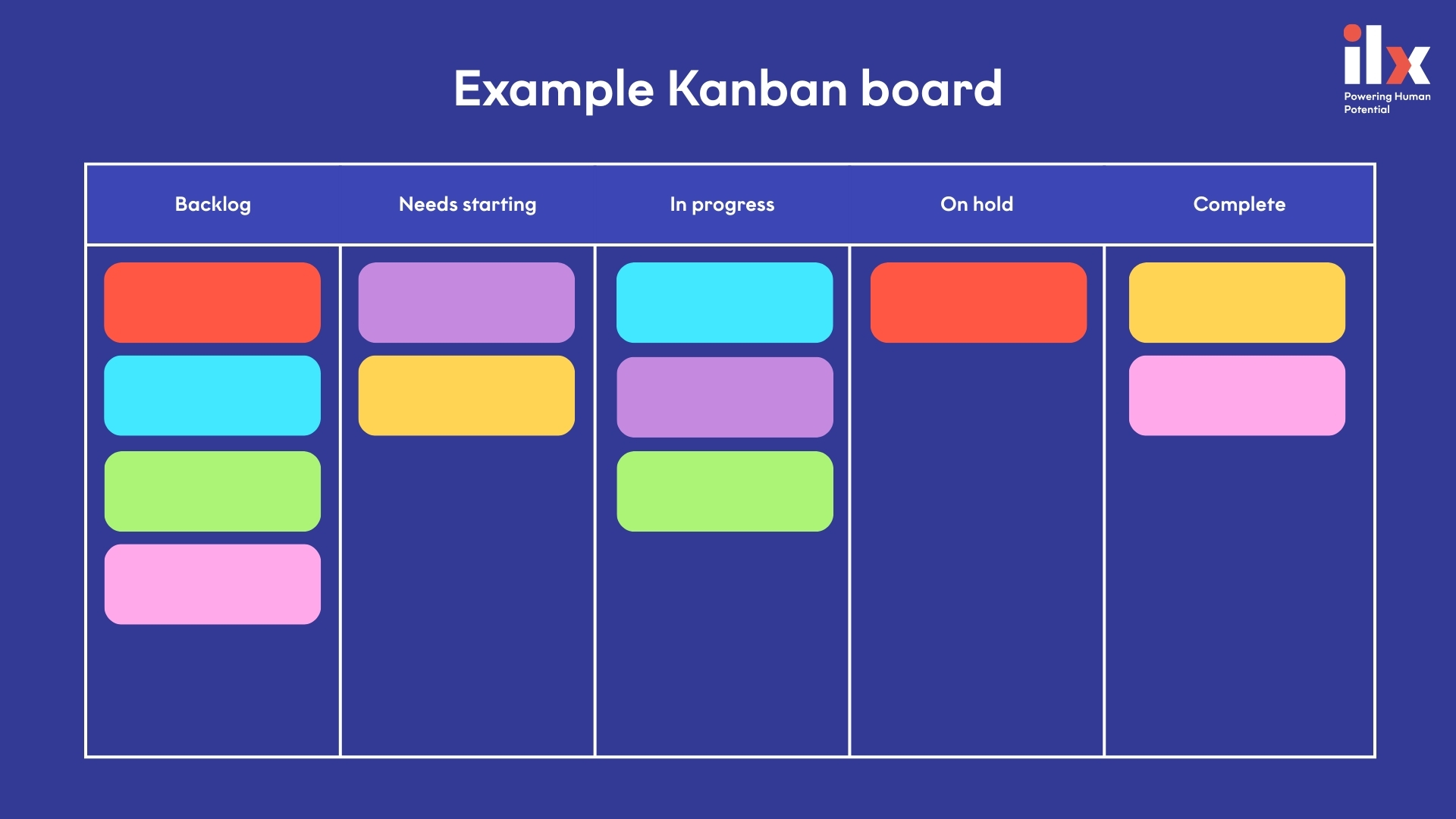
The benefits of Kanban in project management
Kanban supports workflow management in a way that is accessible to both Agile and traditional project environments. Its advantages are practical and visible.
First, transparency improves. A Kanban board makes workload and status immediately clear. Stakeholders can see what is being worked on and where delays are occurring without waiting for a status report.
Second, bottlenecks become easier to identify. If work consistently accumulates in one column, it highlights a constraint in the process. This creates an opportunity for improvement rather than reactive problem-solving.
Third, delivery becomes more predictable. By measuring how long tasks take to move across the board, teams can build a clearer understanding of cycle time. Over time, this data supports more realistic forecasting.
Kanban also encourages ownership. Because the workflow is visible to everyone, team members can take responsibility for moving work forward rather than waiting for direction.
For project managers, this supports oversight while maintaining team autonomy.
How project managers can use Kanban boards effectively
Introducing Kanban boards is straightforward. Using them well requires intention.
Start by mapping your existing workflow. Instead of designing an ideal process from scratch, observe how work currently moves through the project. Identify key stages and represent them clearly on the board. This ensures the board reflects reality rather than aspiration.
Next, define work in consistent units. Tasks should be small enough to move across the board within a reasonable timeframe. Large, undefined items reduce visibility and weaken the value of visual project management.
Work in progress (WIP) limits should then be agreed. These limits encourage focus and reduce context switching. If a column reaches its maximum, the team concentrates on completing existing tasks before starting new ones.
Reviewing the Kanban process
Project managers also play a role in facilitating regular review of the board. Short, focused conversations around the board help the team assess flow, discuss blockers and adjust priorities. The emphasis remains on managing workflow rather than assigning tasks.
It is equally important to use data sensibly. Metrics such as cycle time or throughput can inform decision-making, yet they should support improvement rather than drive pressure. Kanban works best when it encourages continuous refinement of the process.
Common pitfalls to avoid
While Kanban is simple in principle, certain bad habits can reduce its effectiveness.
Boards that are not updated regularly lose credibility. If the visual representation does not match reality, the value of transparency disappears.
Overcomplicating the board is another risk. Too many columns or excessive categorisation can make it harder to interpret at a glance. Clarity should remain the priority.
Finally, focusing solely on task movement without discussing flow limits the team’s learning. The purpose of Kanban is not to move cards for appearance’s sake. It is to improve how work progresses through the system.
Project managers should encourage reflective conversations about why work slows down and what adjustments may help.
Strengthening workflow through visual project management
Kanban provides a practical framework for improving workflow management across a wide range of projects. By making work visible, limiting work in progress, and reviewing flow regularly, teams can deliver more consistently.
For project managers, Kanban boards offer a balance between oversight and flexibility. They support transparency without adding heavy documentation and help to identify issues before they escalate.
Used thoughtfully, Kanban enhances visual project management and strengthens delivery discipline. It creates a shared understanding of progress and encourages continuous improvement in how work moves from idea to completion.
To develop your understanding of Agile approaches and strengthen your project leadership capability, explore our project management and Agile training courses today.